
Beyond Speech: New NIH Grant Advances Speech and Hearing Sciences Professor’s Research to Improve Communication for People with Parkinson’s Disease

Stephanie Borrie, Ph.D., with graduate students in the Human Interaction Lab
For people living with Parkinson’s disease, the seemingly simple act of having a conversation can be challenging. Changes in speech can make it harder to be understood, affecting relationships, social connections, and quality of life. Speech-language pathologist and researcher Stephanie Borrie is working to change that by rethinking how communication difficulties are understood and treated.
Borrie, a professor in the Department of Speech and Hearing Sciences and Interim Associate Dean for research in the Emma Eccles Jones College of Education, Health, and Human Sciences, also directs the Human Interaction Lab. She recently received a two-year R21 research grant from the National Institute on Deafness and Other Communication Disorders, part of the National Institutes of Health (NIH), to investigate a novel approach to improving communication for people with Parkinson’s disease. The new award brings her active NIH research portfolio to three concurrent grants totaling more than $5.4 million.
The new project explores whether entrainment—the natural tendency for people to adjust the way they speak to match their conversation partners—can help people with Parkinson's disease communicate more effectively.
“Traditional speech therapy often asks people with Parkinson’s to consciously change how they speak, but those strategies can be difficult to maintain in everyday conversations,” explained Borrie. “We know that people naturally adapt their speech to match their conversation partners. We’re investigating whether we can harness that process to make effective speaking strategies easier to adopt.”
Working with collaborators at the Mayo Clinic and the University of Texas at El Paso, Borrie's team is investigating whether training communication partners to speak more clearly, slow down, or use simpler language encourages people with Parkinson’s disease to adopt these strategies themselves. By using the natural dynamics of conversation to encourage more effective speaking strategies, this approach could improve everyday communication, while placing less burden on the person with the disorder.
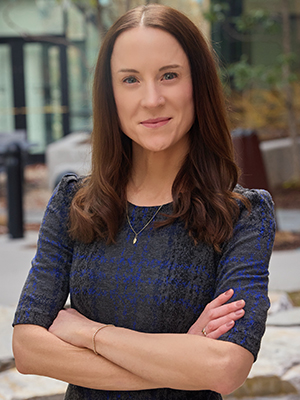
Stephanie Borrie
The new R21 grant is part of a broader research program that is challenging how speech disorders are understood and treated. At the heart of Borrie’s work is a shift from speech to speaking. While traditional approaches have focused on improving an individual's speech production, her research recognizes that speaking is an active, social process that unfolds through interactions with others.
“Improving speech production is important, but ultimately, what matters is whether those improvements translate into more successful conversations,“ said Borrie. “Our work looks beyond speech production alone to understand how we can help people communicate more effectively in their everyday lives.”
Borrie’s research program also includes two major NIH R01 grants: one investigating what makes conversations successful and another focused on communication partner training. Collectively, these projects are advancing approaches to treating communication difficulties in Parkinson’s disease that recognize communication as a shared, collaborative process.
What began as a small research operation when Borrie joined USU as a new assistant professor in 2014 has grown into a substantial, interdisciplinary clinical research program. Borrie now leads large, multisite studies that bring together expertise in engineering, statistics, linguistics, neurology, psychology, and speech science. The program has also built substantial research capacity at USU, creating opportunities for students and early-career scientists to contribute to cutting-edge clinical research.
Karen Muñoz, professor and head of USU’s Department of Speech and Hearing Sciences, emphasized the significance of Borrie’s work. “Stephanie has built an extraordinary research program that brings together expertise across disciplines and institutions to tackle some of the most challenging questions in communication disorders,” said Muñoz. “What makes her work so important is that she’s not simply developing new speech treatments for people with neurological disorders. She’s changing how we think about communication and opening up new possibilities for improving people’s lives. Securing three concurrent NIH research grants is a remarkable achievement and a testament to her leadership in the field.”
“What matters to me is whether our research actually makes a difference in people’s lives,” said Borrie. “We can improve someone’s speech in the clinic, but if they’re still struggling to communicate and connect with the people around them, we haven’t done enough. I want our research to help change that.”